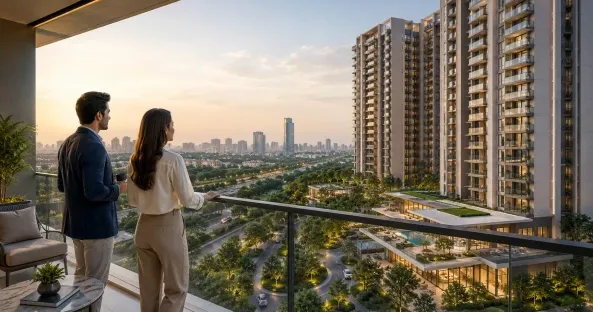
Buying a luxury apartment in Gurgaon involves a major financial commitment. The decision deserves careful evaluation, not a quick judgment based on first impressions. This guide explains how to evaluate a luxury apartment in Gurgaon before you buy, step by step.
Advertisements, brochures, and sample flats show a project’s best side. They rarely show construction quality, legal status, or long-term planning. A buyer who relies only on marketing material often misses details that matter after possession. Careful verification protects your investment before you pay the booking amount.
Many buyers make avoidable mistakes. Some choose a project based on appearance alone. Others skip builder background checks, ignore legal approvals, or focus only on amenities while overlooking construction quality. This guide helps you avoid these gaps through a structured evaluation process.
The sections ahead cover location evaluation, builder credibility, legal verification, apartment layout, construction quality, amenities, pricing, project planning, site inspection, and a complete buyer checklist. Each section builds on the previous one, so you can follow the guide from start to finish or jump directly to the step you need.
Why Evaluating a Luxury Apartment Before Buying is Important
Buying a luxury apartment is a long-term financial and lifestyle decision. A high price tag alone does not confirm good planning, strong construction, or lasting value. A careful evaluation helps you separate genuine quality from surface appeal before you commit your money.
Luxury Pricing Doesn’t Always Mean Luxury Living
A high price does not automatically mean high quality. Two luxury apartment projects priced similarly can offer very different living standards. One project may invest in construction quality, ventilation, layout efficiency, and open spaces. Another may spend more on marketing and visual appeal.
Price alone should never drive your buying decision. Luxury depends on planning, comfort, privacy, and how the apartment performs over time, not on the number on the price sheet. Different projects offer different levels of quality and planning, so compare features, not just cost, before you decide.
Why First-Time Luxury Buyers Often Make Costly Mistakes
First-time buyers often focus on what they can see and skip what they cannot. A few common patterns repeat across luxury purchases.
A buyer may like the sample apartment but overlook the actual project layout. Many compare only prices across projects, without checking construction quality or specifications. Some skip the builder’s track record on past projects, and others move straight from a site visit to a booking without verifying legal approvals. Brochure claims often go unverified, future maintenance costs go unchecked, and the surrounding neighbourhood gets little attention beyond a single visit.
These gaps do not show up immediately. They surface later, after possession, when changes are harder to make. Checking each of these areas before booking protects your long-term satisfaction.
What You Will Learn From This Guide
This guide walks you through a complete evaluation process for a luxury apartment in Gurgaon. The sections ahead cover project location, builder reputation, legal approvals, master planning, floor plans, construction quality, apartment specifications, smart home features, security, sustainability, amenities, parking, total ownership cost, payment plans, investment potential, site inspection, and a final buyer checklist.
Each step builds on the one before it, giving you a complete picture before you make a decision.
What Defines a Luxury Apartment in Gurgaon?
A high price, a swimming pool, or a glossy brochure does not make an apartment luxurious. Genuine luxury combines location, planning, space, construction quality, specifications, privacy, security, and lifestyle facilities. No single feature defines it alone.
Difference Between Premium and Luxury Apartments
Premium apartments typically offer a better location than standard projects, along with improved finishes, amenities, and construction specifications. Luxury apartments go further.
A luxury apartment offers larger living spaces, stronger privacy, and lower density per floor. It includes better planning, better views, and higher construction standards. Buyers also get larger balconies, better natural light, stronger ventilation, tighter security, and better lifestyle facilities, supported by higher-quality maintenance.
Price alone does not determine luxury. The complete living experience does. Two apartments may carry similar price tags, yet one offers larger balconies, fewer units per floor, and better privacy, while the other only delivers modern interiors. This is why buyers should evaluate the full project, not just the price sheet.
Characteristics of a True Luxury Residence
A genuine luxury residence includes a defined set of characteristics. Each one supports daily comfort and long-term value.
Location matters first: a prime location supports convenience and future resale. A well-planned master layout improves movement and open space within the project. A spacious apartment with a good floor plan supports comfortable daily living, while natural light and cross ventilation improve air quality and reduce energy use.
Large balconies and high ceilings add a sense of openness. Quality construction and premium specifications, including branded fittings, support durability and daily use. Smart home readiness adds convenience, while strong security and privacy protect residents.
A clubhouse, sports facilities, and green spaces support lifestyle and recreation. Adequate parking and low-density planning reduce congestion. Visitor management adds a layer of security, and consistent maintenance quality keeps these standards intact over time. Sustainable features and strong resale potential round out a complete luxury residence.
Modern Luxury Homebuyer’s Expectations
Buyer expectations have shifted beyond interiors and amenities.
Earlier, buyers mainly looked at large apartments and clubhouse facilities. Today, buyers also evaluate privacy, open spaces, and community planning. Many consider smart home technology, sustainability, and energy efficiency before booking. EV charging, co-working spaces, and wellness facilities now influence decisions, along with pet-friendly zones, senior citizen areas, and children’s play spaces.
Security and maintenance standards carry more weight than before. Buyers also weigh long-term property appreciation, construction quality, and builder reputation alongside daily comfort and convenience. Luxury today means evaluating the overall living environment, not just the apartment’s appearance.
Quick Luxury Apartment Evaluation Checklist
10 Things You Should Check Before Booking
Before you commit to a detailed evaluation, run through this quick checklist. It covers the ten checks every luxury apartment buyer should complete before booking.
- Evaluate the Location – Connectivity, daily convenience, schools, hospitals, and future neighborhood development.
- Evaluate Builder Reputation – Track record, luxury housing experience, customer reviews, after-sales service.
- Verify Legal Approvals and Documentation – RERA, sale agreement, OC/CC, encumbrance check, bank loan approval.
- Review the Master Plan and Project Density – Layout planning, low vs high density, open space percentage.
- Evaluate the Apartment Layout and Floor Plan – Functional layout, room dimensions, natural light, storage, Vaastu.
- Inspect Construction Quality – Structure, plumbing, electrical, flooring, water supply, waterproofing, generator backup.
- Check Smart Home and Technology Features – Smart integration, automation expandability, EV-ready parking.
- Evaluate Amenities and Lifestyle Facilities – Clubhouse, green spaces, parking, pet-friendly zones, community and indoor amenities.
- Review Security Systems – Surveillance, access control, security personnel, emergency evacuation planning.
- Check Sustainability and Environmental Features – Energy efficiency, indoor air quality, landscape planning.
- Calculate the Total Cost of Ownership – Base price PLC, maintenance, furnishing cost, annual ownership cost.
- Understand Payment Plans – Construction-linked vs down-payment plans against cash flow and loan eligibility.
- Assess Investment Potential – Price appreciation, end-user and NRI demand, rental potential, future supply.
- Conduct a Thorough Site Inspection – Sample apartment check, multiple-time-of-day visits, resident conversations.
- Review Documentation Before Booking – RERA certificate, draft agreement, payment plan, approved layout.
- Avoid Common Buyer Mistakes – Rushing decisions, ignoring maintenance costs, skipping future family planning.
- Complete Buyer Checklist – Final cross-check across location, builder, legal, apartment, construction, amenities, security, cost, and investment.
Step 1: Evaluate the Location Before Anything Else
Location decides daily convenience, connectivity, and long-term value more than any other single factor. A buyer should evaluate it before reviewing the apartment itself.
Connectivity to Key Destinations
Check the distance and travel time to major roads, expressways, and metro stations. Review access to the airport and to business hubs where residents are likely to work. Strong connectivity supports daily commuting and future resale demand.
Daily Convenience
A luxury location should support daily life without long detours. Check the distance to grocery stores, banks, pharmacies, petrol pumps, and ATMs. Confirm access to public transport and nearby markets for daily shopping. These small conveniences affect day-to-day comfort more than buyers expect.
Proximity to Schools and Hospitals
Verify the distance to reputed schools and multi-specialty hospitals. Families weigh this heavily, and it also supports resale value among future buyers with similar needs.
Future Neighborhood Development
Location evaluation should look beyond current infrastructure. Check planned residential and commercial projects in the surrounding area. Review government planning documents where available, along with population growth trends and social infrastructure additions such as schools, hospitals, and retail. A neighborhood still developing can offer stronger long-term appreciation than one that has already matured.
Step 2: Evaluate Builder Reputation
The builder’s track record affects construction quality, delivery timelines, and post-possession support. This step goes beyond checking a company name.
Track Record and Delivery History
Review the builder’s completed projects and actual delivery timelines against promised dates. Repeated delays across multiple projects signal a pattern, not an exception.
Brand Reputation in Luxury Housing
Luxury construction differs from standard residential development. Check whether the builder has specific experience in luxury housing, not just real estate in general. Review industry awards, the builder’s luxury project portfolio, and the construction standards used across those projects. A builder with a strong mass-housing record may not automatically deliver the same standard in a luxury segment.
Customer Reviews and Reputation
Check reviews from buyers in the builder’s previous projects. Look for consistent patterns in complaints, particularly around construction quality, delays, or communication.
After-Sales Service
Many buyers evaluate a builder only up to possession and ignore what happens after. Check the builder’s maintenance response time, complaint handling process, and facility management quality in existing projects. Review warranty support for structural issues, fittings, and equipment. A builder with strong after-sales service protects your investment well beyond the move-in date.
Step 3: Verify Legal Approvals and Documentation
Legal verification protects ownership and prevents future disputes. Skipping this step creates risk regardless of how good the apartment looks.
RERA Registration
Confirm the project’s RERA registration number and verify it on the official state RERA website. Check the registered completion date, project details, and any complaints filed against the builder.
Sale Agreement and Title Documents
Review the sale agreement carefully before signing. Confirm clear title ownership and check that the land use matches the approved residential plan.
Occupancy and Completion Certificates
For ready-to-move projects, verify the occupancy certificate and completion certificate. These confirm the project has passed final regulatory inspection and is legally fit for possession.
Encumbrance and Legal Disputes
Check the property for any encumbrance, meaning existing loans, mortgages, or legal claims against the land. Review whether the project or builder faces any ongoing litigation. An encumbrance certificate from the relevant authority confirms the property is free of financial liability.
Bank Loan Approval
Check whether major banks have approved home loans for the project. Banks conduct their own legal and technical verification before approving a project for financing. A project approved by multiple banks has already passed an additional layer of due diligence, which adds confidence to your own verification.
Step 4: Review the Master Plan and Project Density
The master plan determines how the project will feel to live in, beyond the four walls of your own apartment.
Project Layout and Planning
Review the overall site layout, including the placement of towers, open areas, and amenities. Good planning ensures adequate spacing between towers for privacy and natural light.
Low-Density vs High-Density Projects
Density directly affects daily living comfort. A low-density project has fewer apartments per acre, which means less crowding in lifts, parking, and common areas. A high-density project may offer a lower price but often comes with more congestion and less privacy. Check the total number of units against the land area to understand the actual density before booking.
Open Space Percentage
Luxury buyers should check the actual usable green and open space, not just the percentage stated in marketing material. Ask for the open space ratio approved in the project’s layout plan and compare it against the built-up area. A high open space percentage supports better ventilation, lower noise, and a more spacious living environment.
Step 5: Evaluate the Apartment Layout and Floor Plan
The floor plan determines how comfortably you live in the apartment every day, beyond its total area.
Functional Layout
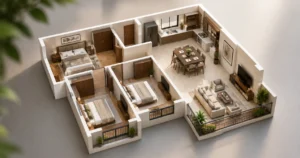
A large carpet area does not guarantee a usable layout. Check for dead corners, long passages, and awkward room shapes that waste space. Review whether furniture placement is practical in each room and whether the layout supports daily movement without obstruction.
Room Dimensions and Privacy
Verify room sizes against your furniture and lifestyle needs. Check whether bedrooms offer adequate privacy from common areas and whether the layout separates private and shared spaces effectively.
Natural Light and Ventilation
Confirm that key rooms receive direct natural light and that the layout allows cross ventilation. This affects daily comfort and reduces dependence on artificial lighting and cooling.
Storage Planning
Luxury buyers often overlook storage during a site visit. Check wardrobe space in each bedroom, the availability of a store room, dedicated linen storage, and kitchen storage capacity. Adequate storage planning improves daily convenience and keeps living spaces clutter-free.
Vaastu (Optional)
Some buyers consider Vaastu compliance an important factor in their decision. If Vaastu matters to you, evaluate the apartment’s layout against Vaastu principles before booking, since this is a personal preference rather than a quality benchmark.
Step 6: Inspect Construction Quality
Construction quality determines durability, safety, and maintenance costs over the life of the apartment.
Structural Quality
Check the RCC structure, wall thickness, and overall build quality. Ask for details on the construction methodology and materials used.
Plumbing and Electrical Specifications
Review the quality of plumbing fittings, pipe materials, and electrical wiring. Branded fittings generally indicate better quality control and easier future maintenance.
Flooring and Finishes
Inspect the flooring material, tile quality, and finishing standards in sample apartments. Check for consistency between the sample flat and the actual unit specifications.
Water Supply System
Water supply is often overlooked during a site visit. Check the capacity and condition of storage tanks, the water pressure across floors, the backup water supply arrangement, and whether the project uses a water treatment system. Reliable water supply affects daily comfort directly.
Waterproofing Quality
Poor waterproofing leads to long-term structural and maintenance problems. Check the waterproofing standards used in bathrooms, terraces, and balconies, since these areas are most prone to leakage over time.
Generator Backup
Confirm the generator backup capacity for common areas and individual apartments. Check whether backup power covers essential appliances during outages, which matters for daily comfort and safety.
Step 7: Check Smart Home and Technology Features
Smart home features add convenience and future-readiness to a luxury apartment.
Smart Home Integration
Review the smart home features included as standard, such as lighting control, security integration, and remote access systems.
Home Automation Expandability
Check whether the apartment’s wiring and infrastructure support adding new smart devices in the future. A system that cannot expand limits your ability to upgrade technology as it evolves.
EV Ready Smart Parking
Confirm whether parking spaces include EV charging points or wiring for future installation. This is an increasingly important consideration as electric vehicle adoption grows.
Step 8: Evaluate Amenities and Lifestyle Facilities
Amenities support daily life and recreation, but their value depends on practical usability, not just variety.
Clubhouse and Sports Facilities
Review the clubhouse size, included facilities, and sports amenities such as courts or a gym. Check whether these facilities suit your lifestyle needs.
Green Spaces and Parking
Confirm the availability of landscaped green areas and adequate parking for residents and visitors.
Pet-Friendly Facilities
Many buyers now specifically look for pet-friendly provisions. Check for dedicated pet areas, walking paths, and any building rules related to pets before booking.
Community Spaces
Review shared spaces such as reading areas, a multipurpose hall, and dedicated celebration areas. These spaces support community interaction and events without affecting your personal living space.
Indoor Lifestyle Amenities
Check for indoor facilities such as an indoor games area, a library, or a business lounge. These add value for residents who prefer indoor recreation or need a space to work outside their apartment.
Step 9: Review Security Systems
Security affects daily peace of mind and should be evaluated beyond the presence of CCTV cameras.
Surveillance and Access Control
Check the coverage of CCTV cameras, entry and exit access control, and visitor management systems at the main gate and individual towers.
Security Personnel
Technology alone does not provide complete security. Check the number of trained security personnel deployed across the project, their shift coverage, and their response protocols.
Emergency Evacuation Planning
Confirm the project’s emergency evacuation plan, including fire exits, evacuation routes, and fire safety equipment. Ask whether the building conducts regular safety drills, since this directly affects resident safety during an emergency.
Step 10: Check Sustainability and Environmental Features
Sustainable design supports lower running costs and a healthier living environment.
Energy Efficiency
Check for energy-efficient design elements such as proper insulation, efficient lighting in common areas, and solar power use where applicable.
Indoor Air Quality
Review ventilation design and any air filtration systems that support indoor air quality. This matters particularly in apartments facing busy roads or industrial areas.
Landscape Planning
Evaluate the quality and maintenance of landscaped areas within the project. Well-planned landscaping improves the living environment and supports better air quality around the towers.
Step 11: Calculate the Total Cost of Ownership
The booking price is only one part of the total cost. A complete evaluation includes ongoing and one-time expenses.
Base Price and Additional Charges
Review the base price along with preferential location charges (PLC), and other one-time charges added at booking.
Maintenance Charges
Check the monthly maintenance cost and what it covers, including security, common area upkeep, and facility management.
Furnishing Cost
Many buyers calculate only the apartment price and forget furnishing costs. Budget separately for curtains, wardrobes, furniture, and major appliances, since luxury apartments often require a higher furnishing standard.
Annual Ownership Cost
Calculate the full annual cost of living in the apartment, not just the one-time buying cost. This includes maintenance, property tax, parking charges, and utility costs. A clear annual ownership figure helps you compare projects more accurately.
Step 12: Understand Payment Plans
Review the available payment plan options, such as construction-linked plans or down-payment plans, and compare the financial terms against your own cash flow and loan eligibility before choosing one.
Step 13: Assess Investment Potential
A luxury apartment is both a home and a long-term asset. Investment potential deserves a structured evaluation.
Price Appreciation Trends
Review historical price trends in the project’s micro-market over the past few years to understand realistic appreciation patterns.
Demand from End Users
Strong end-user demand supports stable long-term value. Check whether the project and location attract genuine buyers planning to live there, not only investors.
NRI Demand
Many luxury micro-markets in Gurgaon attract strong NRI interest. Check whether the project and location see consistent NRI demand, since this often supports both pricing strength and rental potential.
Rental Potential
Evaluate the rental demand in the area and the expected rental yield, particularly if you plan to lease the apartment in the future.
Future Supply
Upcoming supply in the same micro-market affects future appreciation. Check how many new luxury projects are planned or under construction nearby. Higher future supply can moderate price growth, while limited supply in a strong location often supports stronger appreciation.
Step 14: Conduct a Thorough Site Inspection
A single site visit rarely reveals the full picture. A thorough inspection requires more than one visit.
Inspect the Sample Apartment and Site
Walk through the sample apartment and compare it against the actual unit specifications. Check the construction site, common areas, and amenities under development.
Visit During Different Times of the Day
Visit the project in the morning, evening, and on a weekend. Traffic patterns, noise levels, and neighborhood activity change significantly across these times, and a single visit will not reveal this.
Speak With Existing Residents
If the project has existing residents in a completed phase, speak with them directly. They can share practical insights on construction quality, maintenance response, and daily living experience that marketing material will not reveal.
Step 15: Review Documentation Before Booking
Before booking, request and review the RERA certificate, the draft sale agreement, the payment plan document, and the project’s approved layout plan. Confirm every document matches what was discussed during the site visit and sales process.
Step 16: Avoid Common Buyer Mistakes
Even careful buyers fall into avoidable traps during the final decision.
Rushing the Decision
Avoid booking immediately after a single site visit. Take time to complete legal verification and compare the project against alternatives.
Ignoring Maintenance Costs
Buyers often focus on the purchase price and overlook ongoing maintenance charges. A lower-priced apartment with high maintenance costs can become more expensive over time than a higher-priced apartment with efficient facility management.
Buying Without Future Family Planning
An apartment that suits your current household size may not suit your needs five or ten years later. Consider future family requirements, such as additional bedrooms or accessibility needs, before finalizing your decision.
Step 17: Complete Buyer Checklist
Use this master checklist to confirm every evaluation area before booking.
Location
- Connectivity to roads, metro, and airport
- Daily convenience (grocery, banks, pharmacy, transport)
- Schools and hospitals nearby
- Future neighborhood development
Builder
- Track record and delivery history
- Luxury housing experience
- Customer reviews
- After-sales service quality
Legal
- RERA registration verified
- Sale agreement reviewed
- Occupancy and completion certificates
- Encumbrance check
- Bank loan approval status
Master Plan
- Project density
- Open space percentage
- Tower spacing and privacy
Apartment
- Functional layout
- Room dimensions and privacy
- Natural light and ventilation
- Storage planning
- Vaastu (if applicable)
Construction
- Structural quality
- Plumbing and electrical specifications
- Flooring and finishes
- Water supply system
- Waterproofing
- Generator backup
Technology
- Smart home features
- Automation expandability
- EV charging readiness
Amenities
- Clubhouse and sports facilities
- Green spaces and parking
- Pet-friendly provisions
- Community and indoor lifestyle spaces
Security
- Surveillance and access control
- Security personnel
- Emergency evacuation planning
Sustainability
- Energy efficiency
- Indoor air quality
- Landscape planning
Cost
- Base price and hidden charges
- PLC
- Maintenance charges
- Furnishing cost
- Annual ownership cost
Investment
- Price appreciation trends
- End-user and NRI demand
- Rental potential
- Future supply in the micro-market
Example of a Well-Planned Luxury Apartment Project in Gurgaon
How to Evaluate a Luxury Apartment Like The Oryza by Origen Realty
The Oryza by Origen Realty is one example of a luxury residential project in Gurgaon that buyers can evaluate using the checklist explained throughout this guide. This section walks through that evaluation process using the project as a reference point.
Location
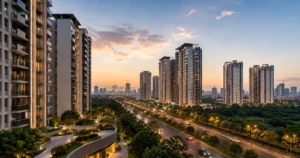
The Oryza is located in Sector 88A, Gurgaon, along Dwarka Expressway. This corridor connects to Delhi and to central Gurugram through the expressway network, and it sits within reach of the airport. Buyers evaluating this location should check road connectivity, travel time to major business hubs, and access to nearby social infrastructure such as schools and hospitals, the same factors covered earlier in this guide.
Configuration
The project offers 3 BHK apartments. This configuration generally suits families, working professionals, and multi-generation households who need additional room separation and space for daily living. Buyers should evaluate apartment sizes and layout against their own household needs, following the layout evaluation principles explained in Step 5.
Design Philosophy
Buyers can evaluate whether the building layout provides adequate natural light, ventilation, and privacy between apartments. A balanced planning approach typically spaces towers to reduce overlooking units and supports cross ventilation in individual apartments. Reviewing the actual floor plan and tower spacing, rather than relying on renders alone, gives a clearer picture of how the design performs in practice.
Low-Density Planning
Low-density planning means fewer apartments share common spaces such as lifts, lobbies, and amenities. This generally supports more privacy and less crowding. Buyers can verify density by checking the number of units per floor, the total number of towers, and the open space ratio in the approved layout plan.
Environmental Design
Buyers should evaluate green spaces, landscape planning, walking paths, and any rainwater harvesting or natural ventilation features included in the project. These elements affect daily living conditions, including air quality and ambient temperature around the towers. Reviewing the landscape plan alongside the construction specifications gives a more complete picture than relying on visual renders alone.
Suitable Buyer Profile
This type of project may suit families seeking larger apartments, professionals who value Dwarka Expressway connectivity, and long-term homebuyers planning to live in the property rather than only invest in it.
Frequently Asked Questions
What should I check before buying a luxury apartment?
Check location, builder reputation, legal approvals, construction quality, floor plan, amenities, and pricing. Verify each factor before booking, not after. A site visit confirms what marketing materials cannot.
How do I identify a genuine luxury apartment?
Genuine luxury combines planning, space, privacy, and construction quality, not just price. Evaluate specifications and builder reputation together. Price alone never confirms quality.
Is location more important than amenities?
Both matter for different reasons. Location drives connectivity and future appreciation. Amenities drive daily comfort. Evaluate both together.
Why is builder reputation important?
Builder reputation affects construction quality, delivery timelines, and legal compliance. It also determines post-possession support. Reviewing past projects reveals this pattern clearly.
What legal documents should I verify?
Verify RERA registration, land ownership, building approvals, and the sale agreement. For ready-to-move projects, check the completion and occupancy certificates too. These protect ownership rights.
How do I compare two luxury apartment projects?
Compare location, builder track record, specifications, amenities, construction quality, and pricing. Review layout efficiency and maintenance standards. A structured comparison beats brochure claims.
What is a good ceiling height for a luxury apartment?
Luxury apartments generally offer higher ceilings than standard projects. Higher ceilings improve space, light, and ventilation. Confirm exact specifications directly with the builder.
How many apartments per floor are ideal?
Fewer apartments per floor improve privacy and reduce lift congestion. No fixed number applies universally. Lower density generally means more comfort.
Are smart home features worth paying for?
Smart features add convenience, security, and energy efficiency. Their value depends on actual usage. Check expandability for future devices too.
What amenities should a luxury apartment have?
Common amenities include a clubhouse, gym, pool, green spaces, children’s areas, and security. Amenities should support daily living, not just appearance. Match them to your actual lifestyle.
What hidden charges should I expect?
Expect PLC, parking fees, club membership, IFMS, GST, and registration charges. Maintenance adds further ongoing cost. Request a complete cost sheet before booking.
Is an under-construction luxury apartment a good investment?
Under-construction apartments offer price advantages but carry delivery risk. Builder credibility reduces that risk. Ready-to-move units cost more but remove uncertainty.
How can I check construction quality?
Visit the site and inspect the sample apartment against actual construction. Compare specifications with the agreement. Review the builder’s track record for consistency.
What should I inspect during a site visit?
Inspect construction progress, road access, ventilation, and open space. Check common areas, amenities, noise, and traffic. Visit at different times for an accurate picture.
Which Gurgaon locations are best for luxury apartments?
Major luxury corridors include Dwarka Expressway, Golf Course Road, Golf Course Extension Road, SPR, and New Gurgaon. Each offers different connectivity and pricing. Choose based on budget and workplace.
Is a low-density project better?
Low-density projects offer more privacy and less crowding. Common areas stay less congested. Still, evaluate maintenance and overall planning alongside density.
How important is RERA registration?
RERA confirms legal transparency and verified project information. It protects buyers through formal accountability. Always check the registration number before booking.
What affects the resale value of a luxury apartment?
Resale value depends on location, builder reputation, construction quality, and maintenance. Infrastructure growth and demand matter too. Legal compliance supports stronger resale value.
How do I choose the right builder?
Review previous projects, delivery record, and construction quality. Check customer reviews and financial stability. A consistent track record reduces buying risk.
What are the signs of a well-planned luxury project?
Strong master planning, adequate open space, and low density signal good planning. Good floor plans support light and ventilation. Construction quality and maintenance reflect builder credibility.
Final Thoughts
Buying a luxury apartment in Gurgaon involves far more than choosing a property that looks attractive in photographs. A sound decision rests on practical evaluation, covering everything from location and construction quality to legal documentation and ownership costs.
No single factor should determine the final decision. Location, builder reputation, construction quality, legal approvals, layout, amenities, and long-term suitability all work together. A strong location cannot offset poor construction, and attractive amenities cannot compensate for unclear legal title. Buyers benefit most when they weigh these factors as a whole rather than focusing on one alone.
Comparing multiple projects before booking strengthens this decision. Visit project sites in person, review legal documents carefully, study specifications against what is promised, and compare floor plans across shortlisted options. Calculate the full ownership cost and assess the surrounding infrastructure before signing anything. Taking this additional time before booking rarely costs more than the price of correcting a poor decision later.
A structured evaluation process reduces the common mistakes that affect first-time and experienced buyers alike. Careful planning helps buyers choose a property that fits their lifestyle, family requirements, and long-term plans, supported by verified facts rather than assumptions.
Readers who want to understand specific locations can explore guides on Sector 88A Gurgaon or Dwarka Expressway. Those comparing projects can review the detailed information available for The Oryza by Origen Realty to see how the evaluation principles in this guide apply to a real residential development.